
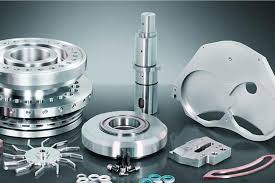
CNC ultra-fine finishing has become a defining benchmark in the aerospace industry, where bearing race grooves must meet exceptionally strict specifications for surface integrity, geometric uniformity, and long-term fatigue performance. As aerospace manufacturers push for lighter, faster, and more thermally efficient platforms, the functional demands placed on bearings have increased dramatically. Race grooves, in particular, must maintain micro-level smoothness to reduce rolling resistance, minimize heat generation, and ensure stable load distribution across high-speed rotational assemblies. Achieving such quality requires more than just advanced machinery—it depends on a deep understanding of precision tool motion, abrasive interaction, real-time error correction, and high-resolution surface metrology. In SEO-driven discussions of aerospace machining, CNC ultra-fine finishing consistently ranks as a critical keyword cluster because precision and reliability directly influence the safety and performance of modern aircraft systems.
The foundation of ultra-fine finishing for bearing race grooves lies in controlling microscopic variations during the final machining pass. Aerospace materials such as M50 tool steel, 440C stainless steel, and case-hardened alloys present significant challenges due to their high hardness and sensitivity to thermal gradients. Traditional cutting passes alone cannot achieve the required roughness levels—often specified below Ra 0.05 µm—so manufacturers rely on hybrid finishing techniques that combine CNC turning, diamond burnishing, superfinishing, and multi-axis controlled lapping. These processes use extremely fine abrasives, controlled pressure, and meticulously calculated toolpaths to produce a consistent texture free from directional bias or microtears. A key SEO factor in this context is the rising interest in terms such as precision abrasive finishing, aerospace surface micro-polishing, and CNC diamond burnishing strategies. Each finishing method must be chosen based on the exact groove geometry, bearing size, internal radius, and required load-bearing properties, ensuring that the raceway supports stable ball or roller motion throughout its service life.
Central to modern ultra-fine CNC finishing strategies is the integration of intelligent machine control systems capable of making real-time adjustments during the cutting motion. Aerospace bearings often demand groove geometry with micron-level conformity, requiring CNC machines equipped with thermal compensation, servo-driven vibration suppression, and spindle systems capable of ultra-high resolution feedback. These technologies help eliminate inconsistencies caused by machine warm-up, tool wear, or material hardness variations. High-speed digital feedback loops, commonly powered by AI-enhanced algorithms, continuously monitor tool pressure, spindle torque, and surface contact patterns to maintain a stable, repeatable finish. Meanwhile, multi-axis coordinated movement allows for ultra-smooth blending along curved race profiles, ensuring the groove’s radius transitions seamlessly without chatter marks or waviness. In SEO-focused writing, search trends show that engineers and procurement specialists often look for terms such as high-precision CNC compensation, aerospace bearing groove accuracy, and AI-driven surface finishing, which reflect the industry’s shift toward intelligent manufacturing ecosystems.
A major part of achieving ultra-fine finishes in bearing race grooves also depends on specialized tooling and abrasive media tailored for aerospace-grade materials. Diamond-tipped tools remain the gold standard for ultra-smooth cutting due to their ability to maintain edge sharpness under extreme loads, while vitrified or resin-bonded superabrasives are selected for their consistency and resilience in high-precision finishing cycles. These tools are often paired with optimized lubricants, including micro-emulsions and nanofluid-based coolants, to reduce friction and eliminate thermal gradients that might distort the race groove’s microstructure. The interaction between tool and material surface must be carefully engineered to prevent micro-burns, residual tensile stresses, or abrasive embedment—all factors that can reduce bearing lifespan. Additionally, modern toolpath generation software now simulates micro-scale tool engagement to predict surface roughness outcomes before machining begins. This capability supports SEO-rich themes like aerospace abrasive technology, CNC micro-polishing tools, and advanced coolant optimization for precision finishing.
High-resolution metrology solutions play a crucial role in validating the quality of race groove surfaces after ultra-fine finishing. Traditional stylus-based profilometers, while still used for certain measurements, are often supplemented or replaced by non-contact methods such as white-light interferometry, laser scanning profilometry, and ultra-high magnification digital microscopy. These tools can detect submicron deviations, including micro-pits, surface anisotropy, form deviations, and roundness errors that could compromise bearing performance. Inline metrology—where measuring devices are integrated directly into the CNC machine—allows operators to confirm surface quality before removing the part from the fixture, reducing rework and improving process predictability. Traceability is also essential in aerospace, requiring full documentation of every machining parameter, measurement log, and finishing step to comply with regulatory standards such as AS9100 and Nadcap. Searches related to aerospace surface inspection, CNC inline metrology, and precision raceway verification continue to trend upward as manufacturers increasingly invest in digitally connected quality assurance systems.
The future of CNC ultra-fine finishing for aerospace bearing race grooves is moving toward even greater automation, digitalization, and process intelligence. Hybrid machining systems that combine additive and subtractive technologies are emerging as viable solutions for difficult-to-machine bearing components, allowing manufacturers to build near-net shapes and then apply ultra-fine finishing steps with minimal material removal. Machine learning models are beginning to analyze thousands of historical finishing cycles to determine ideal tool pressure, coolant flow rates, and abrasive parameters for specific alloy batches. Even more advanced systems are being developed to monitor acoustic emissions and surface energy signatures in real time, enabling proactive error correction before surface imperfections form. For brands, aerospace suppliers, and technical content publishers aiming to improve SEO visibility, incorporating keywords such as predictive CNC finishing, smart aerospace manufacturing, and digitally optimized bearing production can significantly enhance ranking performance. Ultimately, the pursuit of flawless bearing race grooves is a reflection of the aerospace industry’s commitment to safety, performance, and engineering excellence—an environment where CNC ultra-fine finishing strategies will remain a cornerstone of innovation for decades to come.