
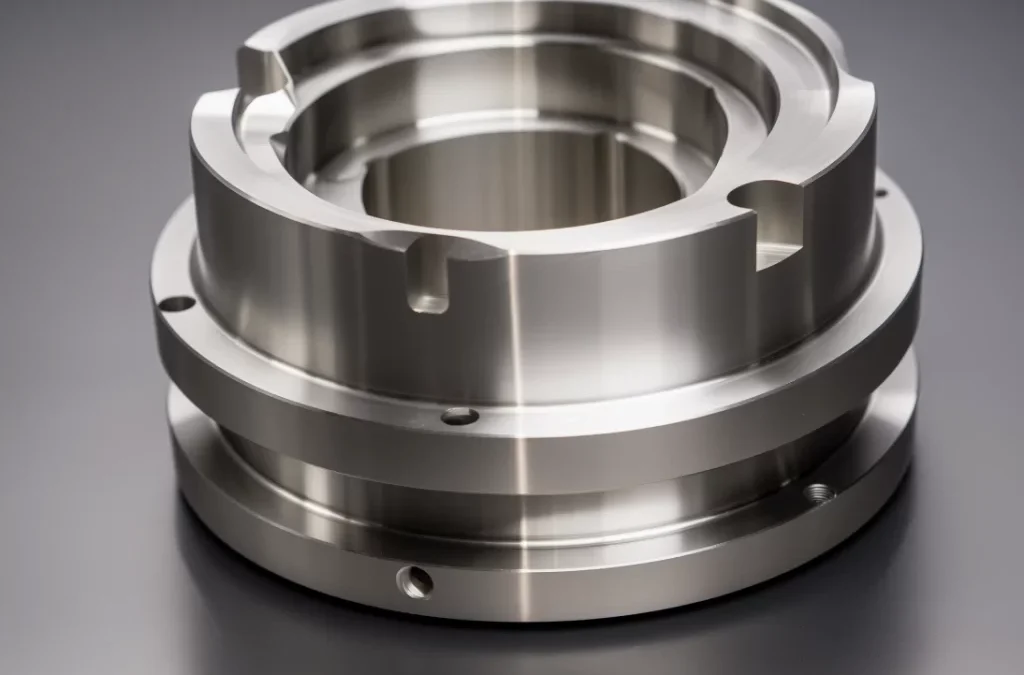
Achieving thermal stability in CNC machining parameters is essential when producing thick-wall Inconel turbine rings, particularly for aerospace propulsion, power-generation turbines, and high-temperature industrial systems. Inconel’s mechanical properties, such as exceptional heat resistance and high tensile strength, make it suitable for environments with extreme thermal loads. However, these same characteristics introduce significant machining challenges, especially when working with thick-walled geometries that retain heat and intensify cutting forces during heavy material removal. Thermal instability can cause dimensional drift, microstructural changes, and accelerated tool wear, all of which threaten the performance and reliability of the final turbine ring. As industries demand tighter tolerances, higher rotational integrity, and longer component lifespans, mastering thermally stable CNC machining parameters has become a critical strategic priority. Manufacturers increasingly rely on advanced toolpath algorithms, optimized speeds and feeds, high-pressure cooling systems, and hardened tooling solutions to maintain performance and consistency throughout long-duration machining cycles.
One of the most important principles in machining thick-wall Inconel turbine rings is controlling heat generation at the cutting zone. Inconel work-hardens quickly, retaining heat within the material and making it resistant to deformation. When the wrong parameters are applied—such as excessive surface speed or shallow chip loads—the heat accumulates rapidly, causing the tool to rub instead of cut. This results in severe work-hardening, unpredictable thermal expansion, and reduced surface quality. To counteract this, the latest CNC machining strategies emphasize slow-to-moderate cutting speeds paired with aggressive, stable feed rates that ensure every tool pass generates a clean, uniform chip. Constant-chip-thickness toolpaths, commonly used in advanced CAM software, further enhance thermal stability by preventing localized spikes in cutting pressure. By focusing on consistent engagement, shops can minimize overheating and maintain predictable thermal behavior even during deep-facing operations or heavy roughing. Maintaining the correct balance between speed, feed, and depth of cut is not only essential for thermal consistency but also critical for extending tool life when machining nickel-based alloys.
Thick-wall turbine rings introduce unique thermal challenges due to their mass and geometry. The material volume creates prolonged heat retention, preventing rapid dissipation and creating uneven temperature gradients across the workpiece. This can cause thermal distortion, especially during multi-stage machining processes where heat gradually migrates inward. To maintain thermal equilibrium, manufacturers often apply a combination of strategic tool sequencing, intermittent cooling cycles, and work offset compensation to ensure dimensional accuracy. High-pressure through-tool coolant delivery is one of the most effective solutions for managing temperature within the cutting zone, providing targeted cooling that disrupts built-up heat and improves chip evacuation. When machining Inconel rings with narrow access points or internal grooves, this coolant strategy becomes even more critical to avoid thermal cracking or surface hardening. Equally important is the use of thermal-behavior modeling in CAM systems, which predicts how the material will respond to extended cycle times. These predictive simulations allow programmers to adjust machining parameters, optimize toolpath direction, and manage heat accumulation long before the tool touches the workpiece.
Tooling selection also plays an indispensable role in achieving thermal stability when machining thick-walled Inconel turbine rings. Carbide tools with advanced heat-resistant coatings, such as AlTiN or SiAlON, deliver greater protection against thermal shock and abrasive wear. When machining Inconel at high temperatures, tool edges soften quickly, increasing the risk of built-up edge and premature tool failure. Coated carbide tools maintain hardness under extreme heat, providing sharper cutting edges and more predictable performance throughout long machining cycles. In operations where deep cuts or heavy roughing are required, ceramic tools or whisker-reinforced materials may also be employed to handle high-temperature loads without losing structural integrity. Additionally, modern tool geometries—such as variable-helix edges, reinforced cores, and polished chip channels—help reduce friction and heat buildup. Matching the correct tool with stable machining parameters ensures not only thermal consistency but also a smoother, more uniform surface finish that supports fatigue resistance and aerodynamic performance in turbine assemblies.
Modern CNC machines equipped with thermal-compensation technologies provide another layer of stability when working with heat-sensitive materials like Inconel. As machining progresses, spindle growth, machine-frame expansion, and axis drift can distort dimensional accuracy, especially during long-duration machining cycles required for thick-walled rings. Thermal-compensation systems continuously monitor temperature fluctuations across the machine structure and automatically adjust tool offsets to counteract thermal drift. This real-time compensation ensures that bore diameters, sealing surfaces, and profile transitions remain within ultra-tight tolerances. Machine stability is further enhanced by using heavy-duty linear guideways, high-rigidity frames, and vibration-dampening spindle assemblies that maintain consistent performance even during aggressive material removal. Sensors integrated into the spindle, coolant system, and drive motors allow operators to track thermal trends throughout the machining process, enabling proactive adjustments to speed, feed, or coolant settings when thermal behavior deviates from expected parameters. These intelligent systems provide a powerful competitive advantage for manufacturers aiming to improve reliability, reduce scrap rates, and maintain continuous production for high-value components such as turbine rings.
Ultimately, achieving thermal-stable CNC machining parameters for thick-wall Inconel turbine rings requires a comprehensive approach integrating machining science, metallurgical behavior, advanced tooling, and modern CNC intelligence. Every stage—roughing, semi-finishing, and finishing—must be governed by parameters that prioritize heat management, structural stability, and predictable cutting forces. Manufacturers who adopt optimized speeds and feeds, high-performance tooling, high-pressure coolant delivery, and machine-integrated thermal control systems are better positioned to deliver components with the durability and precision demanded by the aerospace and power-generation sectors. As global industries continue pushing for higher efficiency turbines capable of withstanding increasingly extreme temperatures, the need for thermally stable machining processes will only intensify. By mastering these parameters today, CNC shops can significantly improve cycle times, reduce operational costs, and deliver turbine rings with superior dimensional integrity and long-term performance. Thermal-stable machining is not simply a technical advantage—it is a strategic requirement for any manufacturer committed to quality, reliability, and innovation in high-temperature engineering environments.