
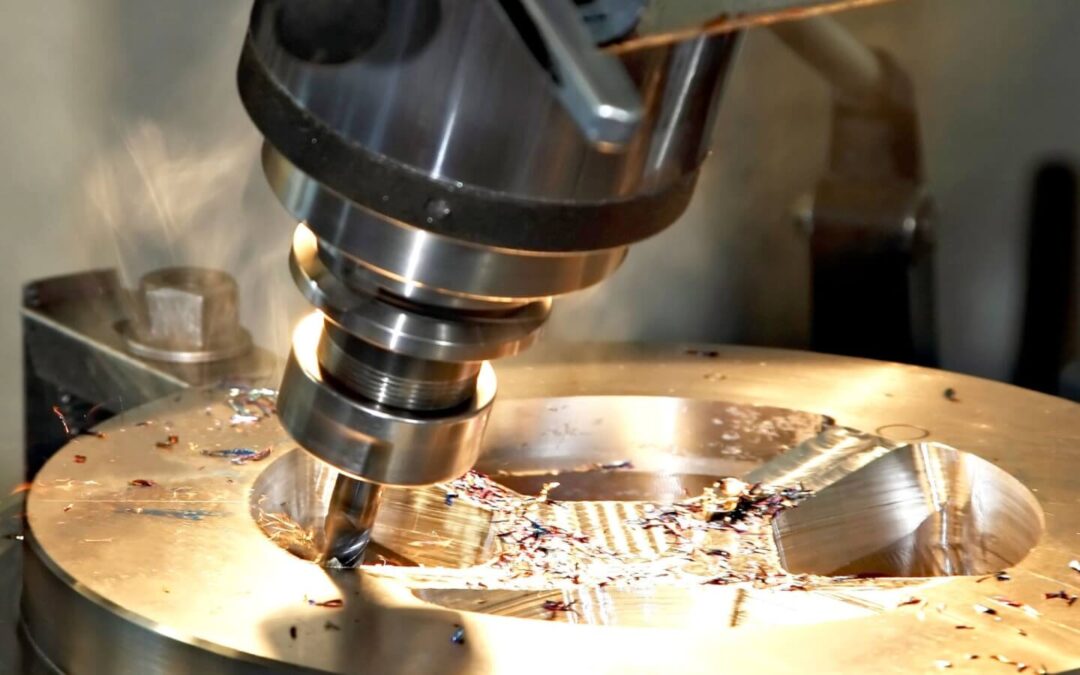
Precision CNC undercutting has become one of the most critical manufacturing capabilities for modern aero-engine components, especially when producing dual-angle compressor vane slots that demand exceptional dimensional control, micro-level repeatability, and high structural integrity. As engine manufacturers push for higher efficiency and improved thermal performance, compressor modules must support tighter part-to-part tolerances and more complex aerodynamic geometries. Dual-angle vane slots, which combine compound entry angles with undercut geometries, require machining strategies that balance clean material removal with the preservation of mechanical strength. In this context, CNC undercutting is no longer a simple subtractive process but a deeply engineered sequence of toolpath design, adaptive feed control, and vibration-managed spindle dynamics. An SEO-focused exploration of these precision methods highlights how advanced machining practices shape the next generation of compressor assemblies.
At the core of precision undercutting is the ability to manipulate the cutter’s geometry and orientation to achieve clean transitions between two different entry angles inside a confined slot environment. Traditional ball-nose or flat-end mills often cannot reach recessed regions without generating tool-induced stresses or micro-chatter marks. Modern CNC machining therefore relies on specialized undercut tools such as lollipop cutters, T-slot cutters, and variable-helix miniature end mills designed to operate at high axial engagement while maintaining edge stability. These tools are paired with software-driven toolpath strategies, including multi-axis swarf cutting, constant-stepover trochoidal motion, and adaptive rest machining. The combination allows the CNC system to precisely shape dual-angle surfaces while minimizing heat buildup and avoiding tool deflection. This level of detail is essential not only for maintaining smooth aerodynamic flow across the vane root but also for ensuring proper mechanical seating during engine assembly. For SEO relevance, terms like precision CNC methods, dual-angle vane slots, and undercut machining processes reinforce the article’s alignment with current search behaviors within the aerospace manufacturing sector.
Material behavior under stress also plays a major role in determining the correct undercutting method. Compressor components are commonly made from nickel-based superalloys, titanium alloys, or advanced stainless steels, all of which exhibit high abrasion resistance and low thermal conductivity. These properties amplify the importance of thermal control, cutting-force modulation, and chip evacuation. Precision CNC undercutting for such materials often integrates cryo-assisted cooling, minimum-quantity lubrication, or high-pressure coolant streams directed at the cutting interface to reduce tool wear and prevent microcracks. Dual-angle slots, in particular, require each surface transition to be machined without compromising the lower-angle undercut region, meaning that heat must be managed throughout the entire path. Failure to do so can lead to taper variations, corner deformation, or stress risers that weaken the vane root. As machining algorithms evolve, real-time compensation for heat distortion has become increasingly common, helping manufacturers meet rigorous aerospace quality standards while shortening overall cycle time.
One of the most significant advancements in recent years is the adoption of multi-axis synchronized motion to achieve extreme undercut precision. Five-axis and six-axis CNC systems allow the spindle to approach the vane slot from multiple angles, enabling compound entry geometry and clean radial transitions. This is especially valuable when producing the lower undercut region where access is restricted and the cutter must maintain constant contact without gouging. By synchronizing tool tilt, rotational pivot, and feed interpolation, CNC machines can maintain optimal chip load and surface integrity across both angled surfaces. Moreover, the implementation of digital twins and simulation-based toolpath validation allows programmers to pre-identify collision risks, tool engagement spikes, and potential chatter zones. These simulations help reduce trial-and-error machining and support a predictive manufacturing environment, aligning with modern SEO trends prioritizing keywords like multi-axis precision machining, advanced compressor component manufacturing, and aerospace CNC optimization.
Quality assurance, meanwhile, has become inseparable from the machining process itself. Precision undercutting for dual-angle compressor vane slots requires inline metrology solutions such as spindle-mounted probes, laser scanners, and structured blue-light inspections. These tools capture real-time dimensional data and feed it back into the CNC control system, enabling adaptive correction for tool wear and micro-deflection. Compared to conventional post-process measuring, inline inspection ensures that any deviation in the undercut profile, angle alignment, or root transition is corrected before the part leaves the machine. This not only improves accuracy but also reduces scrap rates, which is vital for expensive aerospace materials. From an SEO perspective, this integrated measurement approach reflects key search interests in automated inspection systems, CNC accuracy enhancement, and real-time manufacturing analytics.
As global aerospace companies continue to pursue lighter, hotter, and more efficient engine platforms, demand for advanced CNC undercutting methods will increase. Manufacturers that master dual-angle slot machining will gain a competitive advantage in producing high-performance compressor modules with optimized aerodynamic efficiencies and longer operational lifespans. Precision CNC undercutting will continue evolving through smarter toolpath algorithms, enhanced material science, AI-enabled feedback loops, and hybrid manufacturing techniques that merge additive and subtractive processes. For organizations aiming to strengthen their digital footprint in aerospace machining, focusing on SEO terms such as precision undercutting strategies, dual-angle compressor slot machining, and aerospace CNC innovation will help capture relevant industry traffic. Ultimately, the future of compressor vane manufacturing depends on how effectively CNC technology can deliver consistent accuracy, structural reliability, and repeatable high-performance geometry—qualities that define the success of dual-angle undercutting in next-generation turbine engines.